Hi, I’m John McDougall. Today, I’m going to be talking about Google Patents and the case for authority marketing. What I have here on the whiteboard is a drawing of Google page rank from the Google Patent that was filed in 1997 by Larry Page when they were first called Backrub. Not everyone knows that that was the first name of Google, and it was named that because backlinks essentially gave a massage to another website that made it rise up and feel better.
This diagram shows that many links pointing to one site give it a lot of authority or page rank. And then that site, if it links to another site, gives that site a huge amount of “link juice,” we call it. Whereas, one site that doesn’t have a lot of links to it that points to another site doesn’t pass as much energy.
So Google, from its very beginnings, has been looking at what makes a site pass link juice or link energy, and what makes a site more authoritative. So in 2005, they developed a system or filed a patent on what’s called Agent Rank. And that talks about authors and publishers, and scoring different content and entities or agents.
Eric Schmidt, Google’s former CEO who was a CEO for about a decade, talked a lot about that. And basically, you could become irrelevant if you weren’t identifiable on the Web and you weren’t a known entity. And so, Agent Rank and other patents like Knol, talk about systems where if one author like Stephen King mentions another author or comments on this other author, then the value of that other author goes up, and potentially, the rankings. And we don’t know exactly how much Google would be applying this.
Currently, people have been very much on the bandwagon of Google+ authorship and that recently was an experiment that Google did away with. And so, nobody really knows exactly where Google’s going to head with how they’re going to be judging Web sites based on authority, but what we do know is they’ve been obsessed with this.
Numerous patents talking from the very beginnings of Google’s algorithm and changing every year including recent patents on reputation scoring from 2014. And so, the bottom line for people that want better results in the search engines and in Internet marketing in general is that you need to develop great content. And that content can’t be just identified with your brand; it has to be attached to certain people, because Google is looking at agents or individuals, not just brands.
So create great content, share it, get it shared on social media, and then eventually, turn that content into a book so that offline, you become a published author, you can do speaking engagements. And that will build your overall credibility. You’ll get more media appearances. And whether or not we know exactly how Google will pick up on those details, authority marketing and raising your author relevance, if you will, is really critical to Google marketing and just respect in general in building your brand.
But with 6 billion searches a day, Google has big business and we know that they’re continuing to develop systems for this. And so, get started today by creating great content.
 John Cass: Welcome to Authority Marketing Podcast. My name is John Cass, Senior Vice President of Marketing at
  John McDougall: How are you doing, John?
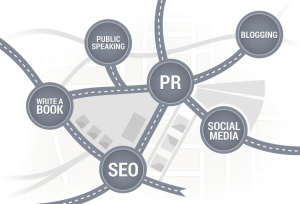 Authority marketing is where you build a personal brand and “positioning” around your expertise. This will help you individually but will help your brand immensely by showing off the depth of your teams knowledge. By developing valuable content such as a book, a blog, podcasts and videos you will be seen as a better resource than your peers – particularly those that are not being proactive about sharing helpful content.
 Keep in mind that it can take a couple years in some cases to fully build yourself up as an authority, even when you have been an expert for decades. But starting with podcasting in a niche, you can move mountains much more quickly than talking about eventually getting around to writing. If you are a systematic and dedicated writer or willing to pay for extremely high quality ghostwriting, that is great but don’t wait on the sidelines if you are not. Rome wasn’t built in a day and even ferocious kings of the jungle started as tiny, cute and fuzzy cubs. Do the basics, start small and you just might surprise yourself how quickly you make significant progress.